

Mr Yum – Web App Redesign

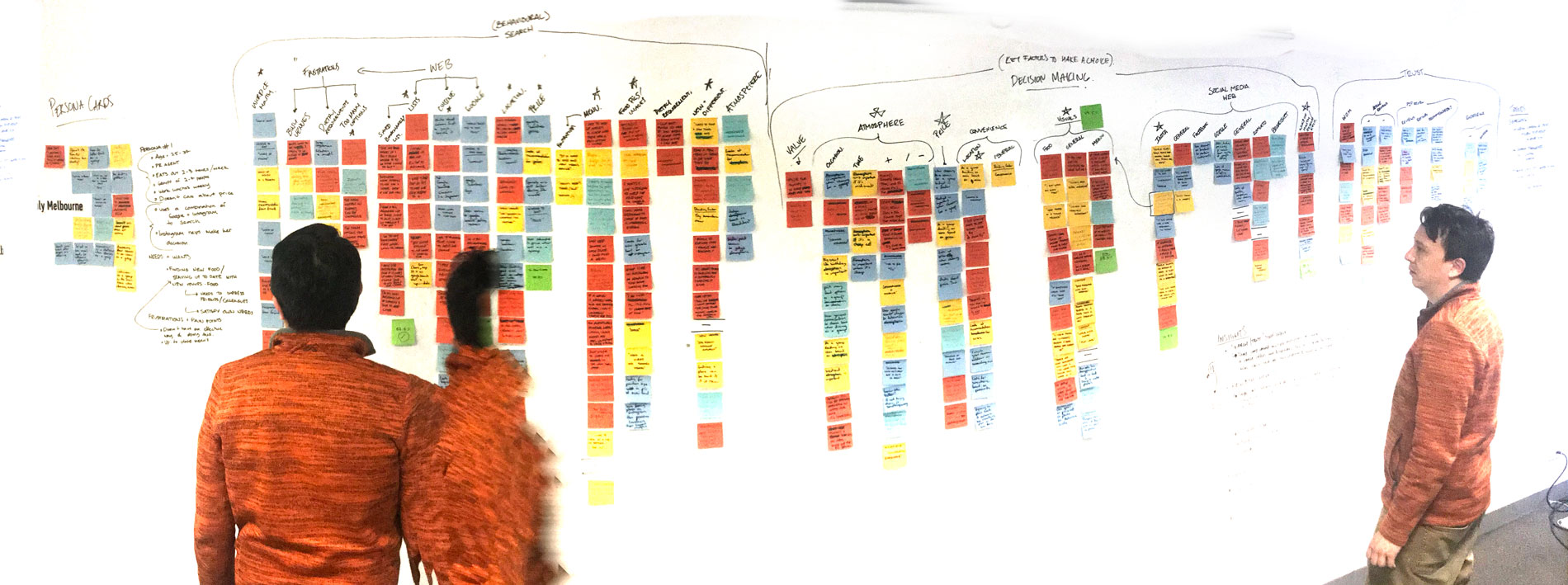
The case study
How do you make a food related site more popular?
Mr Yum is a web platform created for fashionable restaurants and cafes to post online menus allowing customers to view dish level information and pictures. This allows customers inside the venue to see what they are about to eat before they order it. Mr Yum is a departure from other big food related websites like Zomato and Broadsheet who focus less on individual dishes and more on the all round dining experience.
Our task at General Assembly was to push our client, Mr Yum further up the food chain (pun intended) and transform it into a go-to site for food lovers who would use it to inform their decision making before they go out to eat, similar to Zomato and Broadsheet. As it stands Mr Yum is mainly being used inside venues to view food items before customers order them.
the process
To try and elevate the status of Mr Yum we formed a team at General Assembly comprising of Scott, Michelle, Harry and myself. During our two week sprint we had regular client meetings with Kerry one of the founders of Mr Yum. We also went through a rigorous process involving research and design attempting to create a solution that best served the needs of our target user described by our client as a ‘foodie’ (food lover).
Research
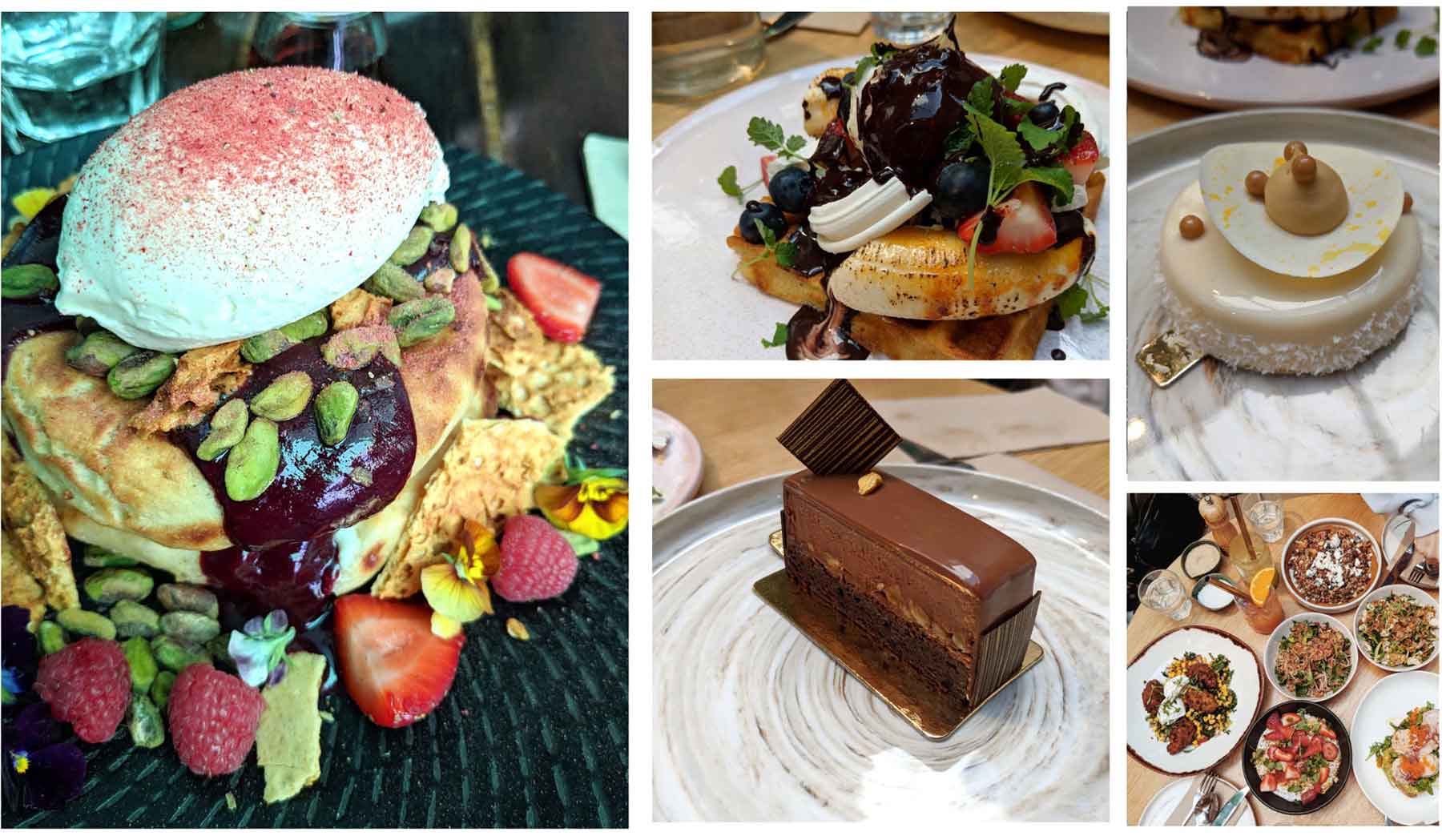
Contextual enquiry: Visiting venues that Mr Yum operates in.
As a group we all worked together on Business Analysis, Interviews, Affinity Mapping, Data Synthesising and Prototyping. My personal role in this project was to research indirect competition and create personas and storyboards.
We began by conducting business analysis which helped to inform our discussion guide. I looked at indirect competitors like Apple Music, Youtube and Netflix. Instead of promoting food items these services offered consumable items like songs and videos.
I conducted an heuristic overview which showed all the different ways these sites allowed users to review and personalise items as well as recommend them to other users. These features Included ratings, comments and sharing.
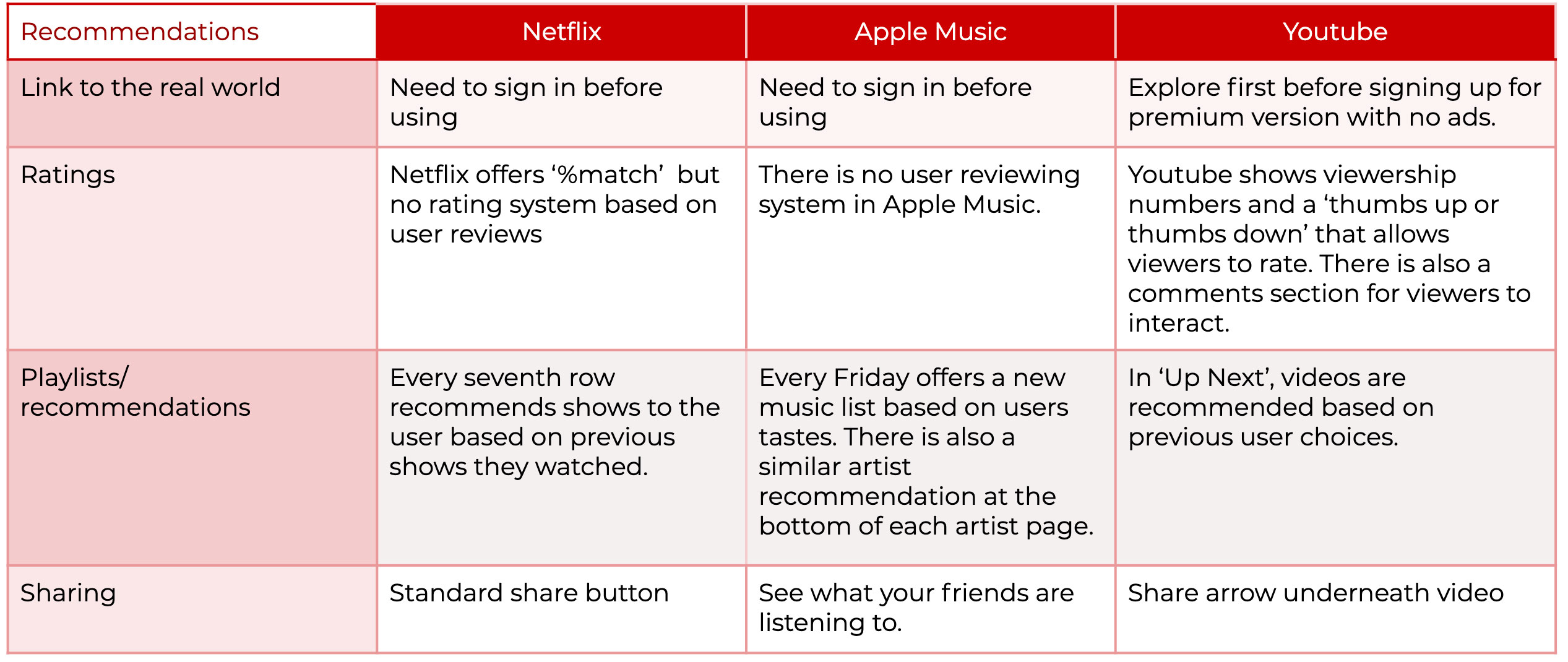
Heuristic analysis of indirect competitors seeing how they recommend and share items.
These insights were my main contribution to the discussion guide. We interviewed 20 people over 2 days, some of these were on the street and others pre arranged. We asked them a range of questions regarding their process when it came to finding somewhere to eat out, what online resources they used and what influenced their decision making.
After synthesising our data into an affinity map our major key finding was ‘Trust’ with interviewees especially keen to ask friends for recommendations.
“A verbal recommendation is the best advertisement.”
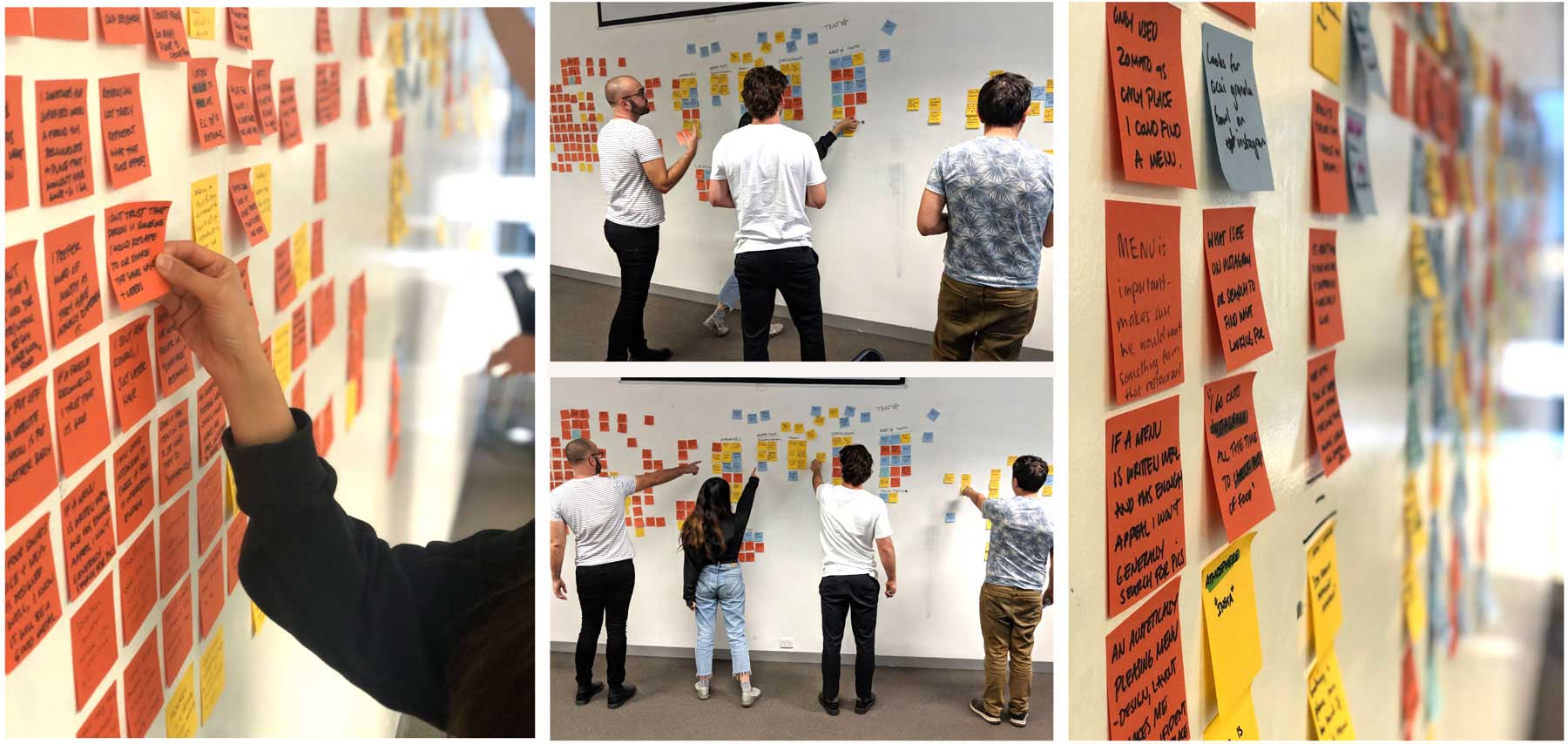
Affinity mapping, synthesising our interview data with Scott, Michelle & Harry.
They also Google searched and jumped between various food related sites reading reviews and looking at images of food before deciding on a venue.
Some of these site included Zomato, Broadsheet, Instagram the venue websites. Our findings also showed important motivating factors in their search were Cuisine, Location, Visuals, New and Interesting Food, Menu and Price. Atmosphere was also a factor but harder to define.
“It’s nice to sit somewhere for a while after a meal”
To back up our findings we released an online survey, receiving 89 responses within 24hours. This survey reconfirmed everything we learnt from the affinity map. The quantitive information from it such as gender, medium age, who users dined out with all helped to paint a fuller picture of a foodie.
To keep the foodie’s needs and frustrations at the forefront of our decision making I took key findings from our research to create a persona called Georgie, a food lover who enjoys exploring new venues and dining out with her partner Tim.
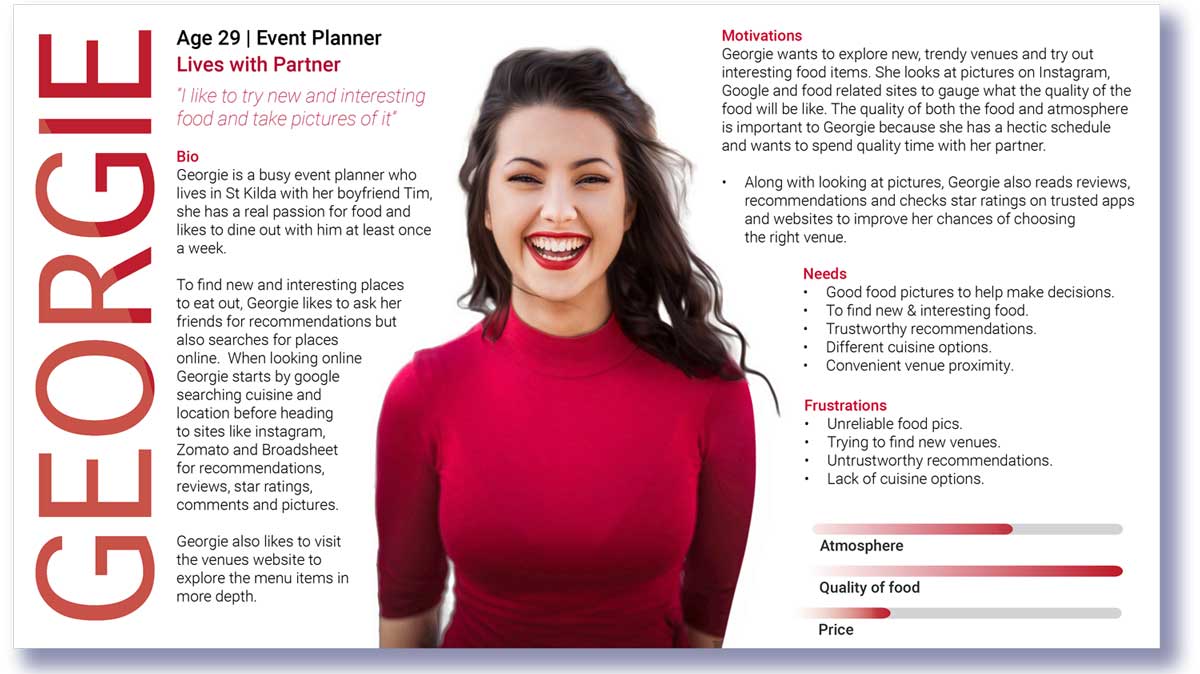
Persona and Mr Yum’s target user aka the ‘foodie’.
After meeting with our clients we decided to stay firmly focused on Mr Yum’s main point of difference as a business which was dish level food items.
“How might we suggest new and interesting dishes?”
We decided the most practical way to build ‘trust’ with the limited resources Mr Yum had was to use food bloggers to recommend food items. The Mr Yum platform benefited food bloggers because it helped to enhance their reputation and increase their online presence while potentially landing them more instagram followers.
“We believe that by introducing food influencers into Mr Yum we will create trust in recommendations for new and interesting dishes.”
design & solution
For the solution we concentrated on making a web app instead of a website because we believed this would be of more benefit to users who were on the go.
I created an animated storyboard which clearly shows how Georgie searches the proposed Mr Yum website for dumplings while trying to find reliable information about them.

Animated storyboard demonstrating how the Mr Yum app solution works.
To begin testing the solution we sketched out a quick paper prototype based on my animated storyboard. The interface design was made up entirely of collections from food bloggers. To test it we asked volunteers to google search dumplings then find out as much as they could about these dumplings on the Mr Yum web app.
paper prototype iteration one
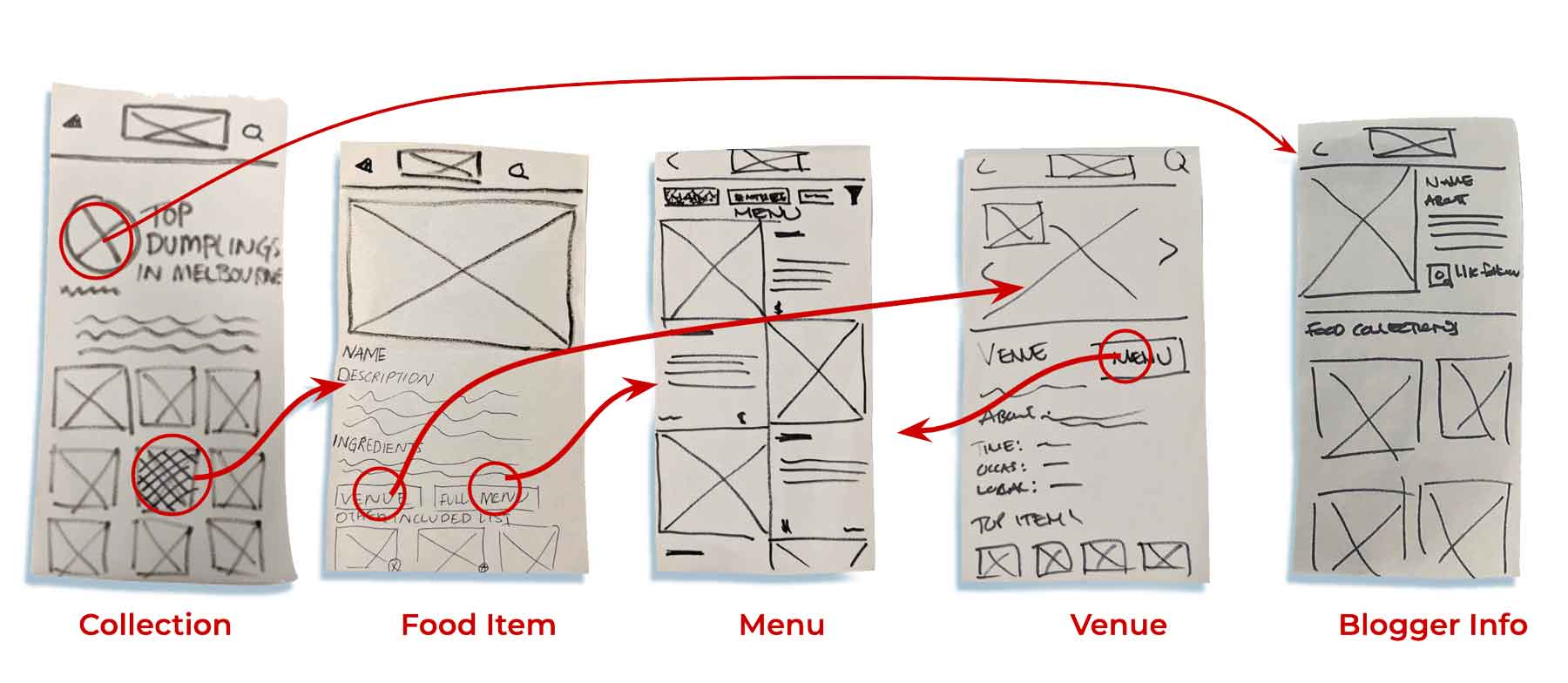
Paper prototype demonstrates an how volunteers navigate to research food items (In this case dumplings).
“The flow is unnatural”
After testing it on 4 volunteers we found that jumping between the Menu and Venue page was confusing and ‘unnatural’ since you had to click back to the food item page to navigate between these pages. There were also no foodie call-to-action buttons on the screen which would allow users to read more information about the food blogger.
In the second iteration of the paper prototype we condensed the menu and venue page into one removing the unnatural flow and the need for users to click back and forth.
digital prototype
After resolving navigation issues we created a clickable digital prototype to test on a mobile phone. For the interface design we looked at Apple Music for inspiration due to the way they organised recommended lists.
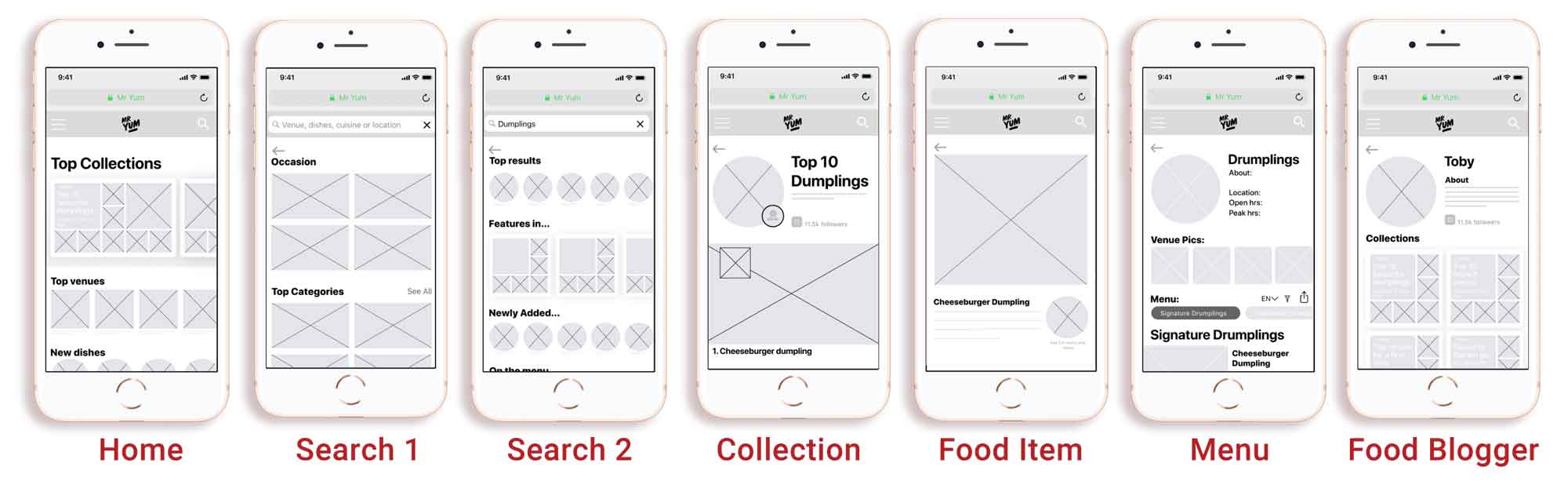
Note 1: Home screen and Search pages added. – Note 2: The menu and venue screens have been combined to avoid excess clicking.
There was confusion testing this prototype since imagery told so much of the story. As a group we worked together in Figma adding images and colour.
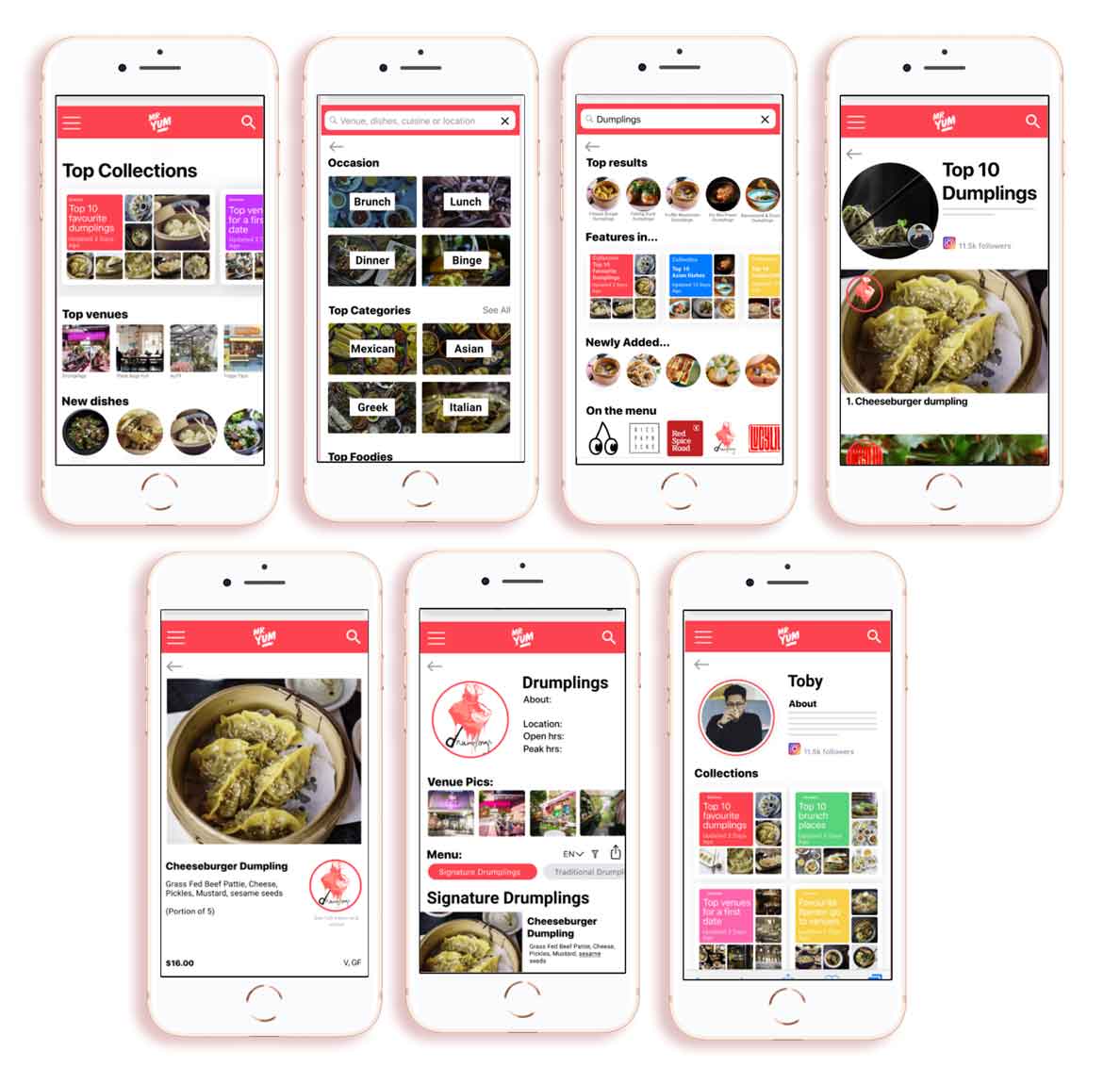
We tested the hi-fidelity prototypes twice, some of the feedback we received was:
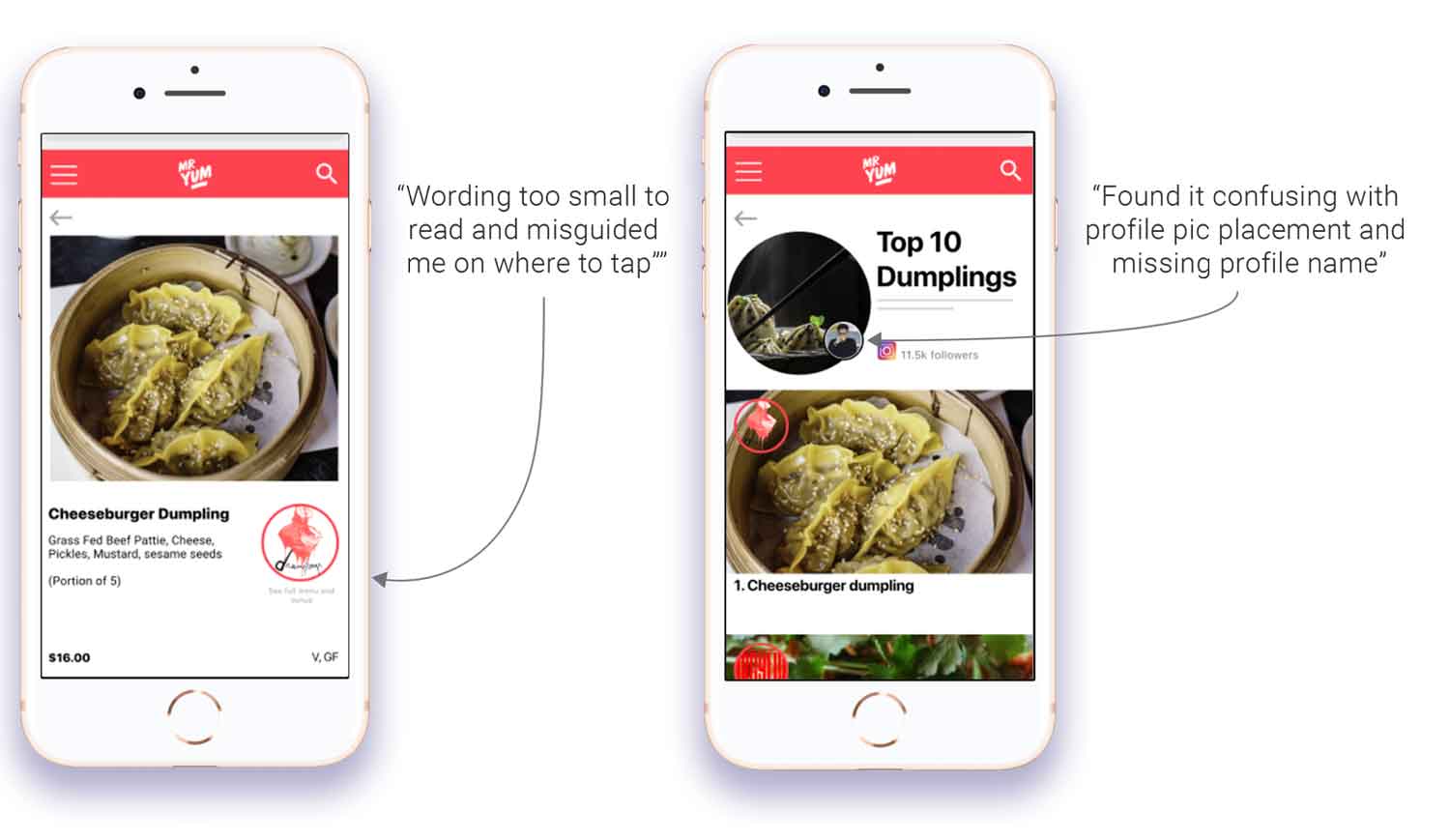
Those were the final changes, the two week sprint was over and it was time to present our findings to our client.
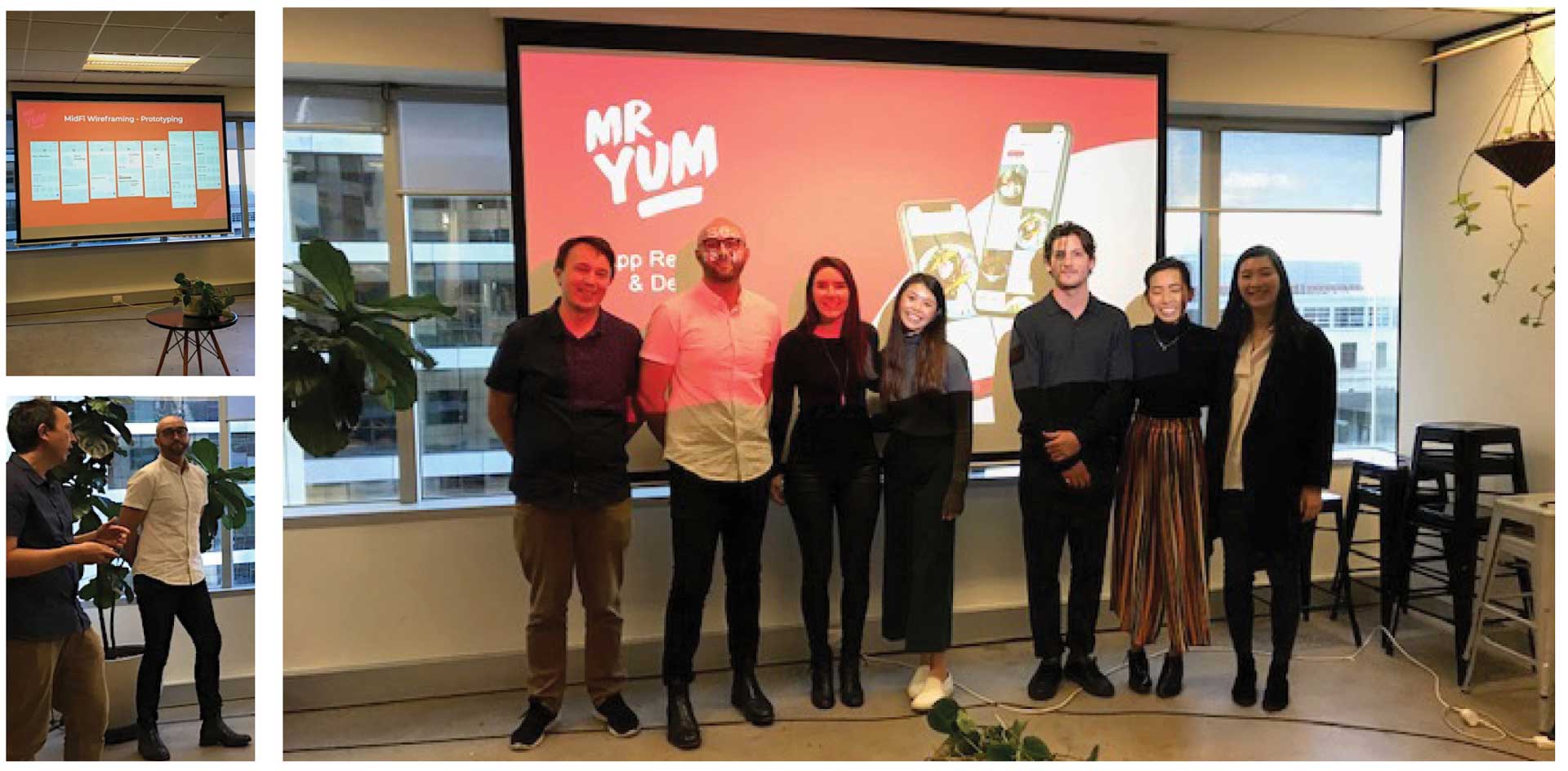
Presenting to our lovely clients from Mr Yum.
future iterations
In future iterations we would like to create a responsive web site and a native app. A native app would give Mr Yum more functionality allowing users to login and save favourites. In turn this would allow them to create personalised lists and share them with friends. This would help to boost Mr Yum as a credible platform since our research states that friend recommendations are important for building trust.
We would also like to develop a food recommendations algorithm that suggest food items to users based on previous choices similar to Spotify and Youtube.
When the product is established and there is more funding it may also be good to use freelance journalists to review food as well since our research also suggests that users like seeing multiple points of view before making a final decision.
learnings
What I learnt from this project is that foodies don’t generally trust one information source and like searching online for different reviews, ratings and images. I also learnt they prefer ‘word of mouth’ over online recommendations.
Boosting Mr Yum and turning it into a trustworthy go-to website for planning an outing relies heavily on the credibility of the food bloggers and how involved they get with the Mr Yum platform. This is an exciting idea though that could yield great results in the near future.